Gezaixi, from paddies to the stage
A day-shaped look at how Lanyang Plain folk songs became gezaixi, then travelled from temple squares to indoor stages, radio and television.
by Omar and Lou
- Where on the coast
- whole county
“Gezaixi, or Taiwanese opera, is the only Chinese-style opera form that originated in Taiwan.”
Morning: songs from the plain
We’d start this story on the Lanyang plain, where gezaixi grew out of folk songs and simple song-and-act performances in the early 20th century. That beginning feels wonderfully close to the ground: songs, a little acting, and a form finding its shape in the place where it began. Yilan is widely regarded as gezaixi’s birthplace, so the plain isn’t just scenery around the story; it’s part of the story itself.
Gezaixi is sung in Taiwanese Hokkien, and that matters to how we picture its roots. This isn’t a form arriving from somewhere else and being set down here; it originated in Taiwan, with its early growth tied to songs and performances on the Lanyang plain. We like the plain-spoken start of it, though one of us is more taken by the songs, and the other by the way song and act belong together.
Midday: a square becomes a stage
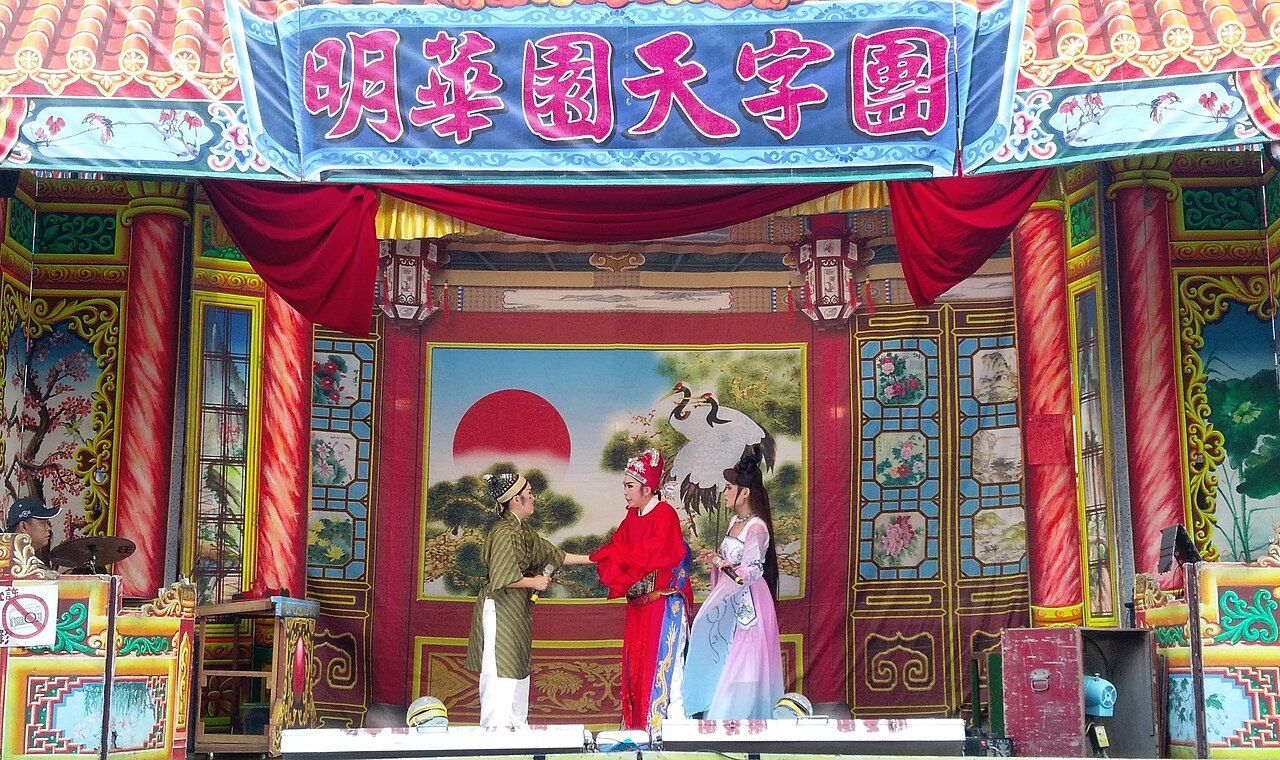
Early gezaixi was performed outdoors in temple squares, often for festivals. That gives the history a public setting from the outset: not only a form made from folk songs, but performances held where festivals brought people together. We can imagine the change in setting without adding much to it; a temple square is already a different kind of place from an indoor stage, and the move between them marks a turn in the form’s life.
In the 1920s, gezaixi moved onto indoor stages. The change didn’t erase the roots on the plain; it carried a form that had grown from folk songs and simple song-and-act performances into another setting. We find ourselves lingering over that transition. The story isn’t a neat swap from one world to another, but a change of place for a Taiwanese opera whose beginnings are still firmly associated with Yilan.
There’s a satisfying shape to this middle part of the day: temple squares, then indoor stages, with the songs and acting at the centre of the account. At the national arts centre in Wujie, gezaixi performances are a regular part of the programme, a present-day point in that longer path. The centre offers a way to think about stages beside the Dongshan River without losing sight of where the form started.
Late afternoon: the story travels on
After the indoor stages came radio and television. Gezaixi had begun in performances on the Lanyang plain and had moved into temple squares and indoor spaces; radio and television added further places for it to be heard and seen. We’re careful not to make that sound like a tidy march forward. It’s simply the route named in the story: from folk songs and song-and-act performances to stages, then broadcasts.
Yilan County has had its own public gezaixi troupe since 1992. That fact gives the story a local thread running into the present, alongside the regular performances at the national arts centre in Wujie. For us, the appeal is in holding both parts together: a form widely associated with its birthplace, and a form that has kept moving through different settings.
By late afternoon, we’d brought the day’s route back to its beginning. Gezaixi started with folk songs and simple performances on the Lanyang plain, and its history carries on through temple squares, indoor stages, radio and television. One of us would stay with the songs; the other would choose the changes of setting. Happily, the story has room for both.
| Part of the day | In the story |
|---|---|
| Morning | Folk songs and song-and-act performances on the Lanyang plain |
| Midday | Temple squares and indoor stages |
| Late afternoon | Radio, television and Yilan County’s public troupe |
 The Atayal of Datong and Nan'ao, by the valley road
 The governor’s house, and the garden around it