The tilted edge of Yilan
At Wushi Harbour, the county museum turns tilted coastal rock into a way of reading Yilan from mountain country to sea.
by Omar and Lou
- Out of Taipei
- about 1.5 h by train the ride in
- Where on the coast
- Toucheng coast
“from its mountains through the plain to the sea”
Morning, with the coast in profile
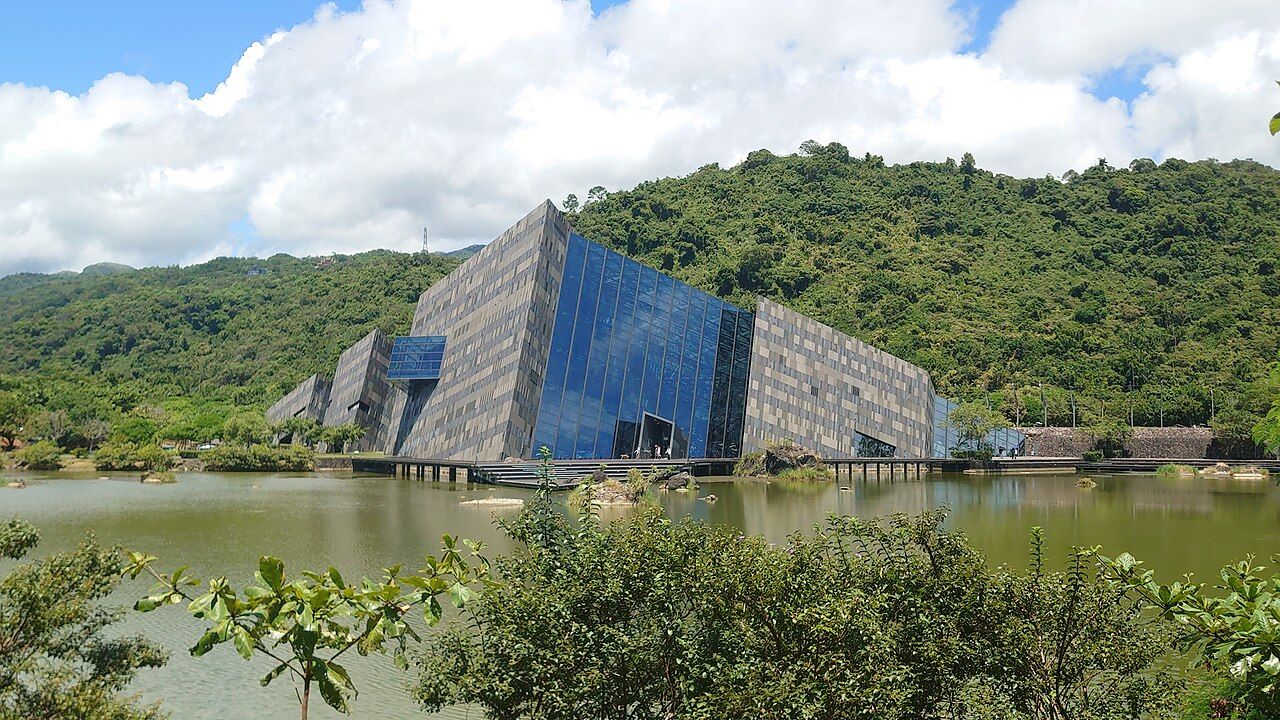
The first thing we notice beside Wushi Harbour in Toucheng is the building’s angle. The Lanyang Museum doesn’t sit apart from the coast as a neutral container; its form takes its cue from the tilted rock layers that rise from the northeast coast, and that makes the outside part of the story before we’ve begun with the exhibits.
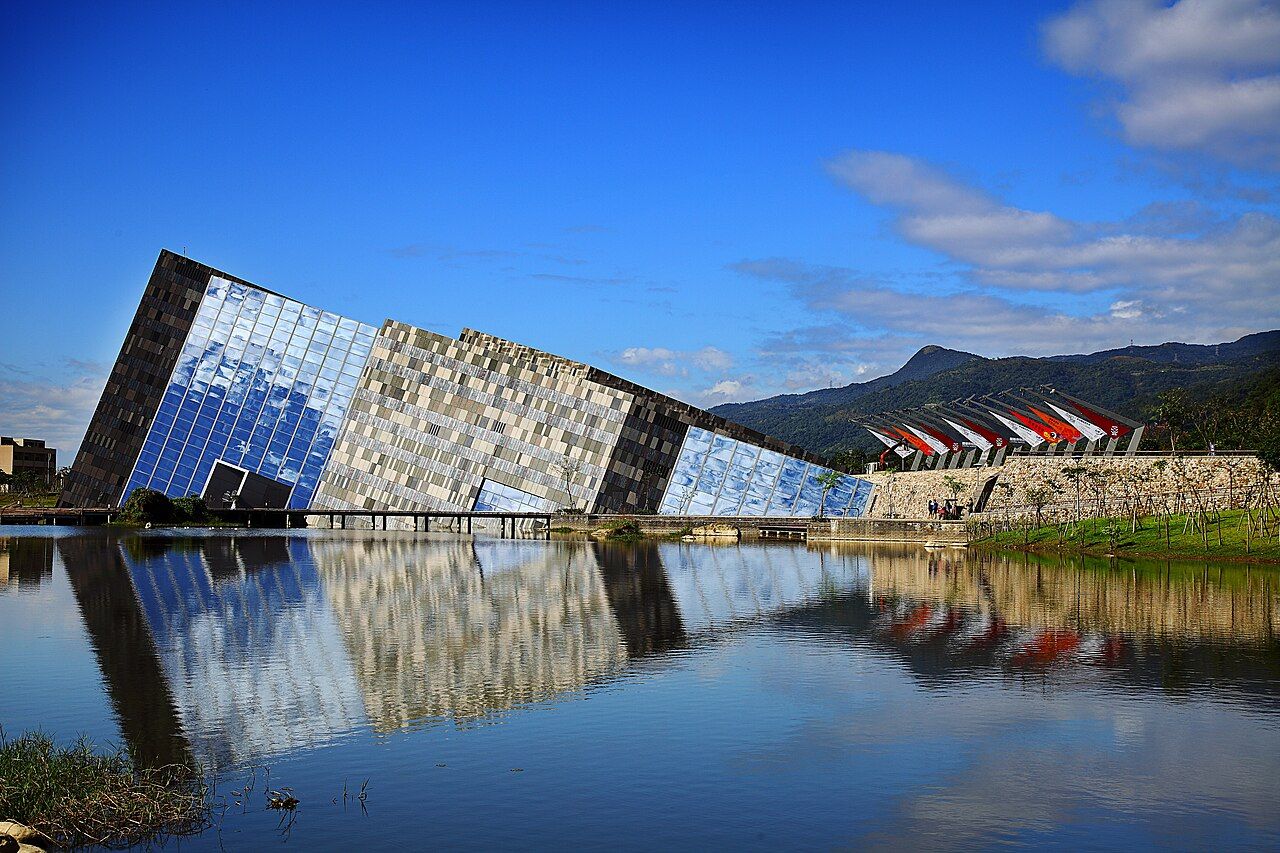
The building was designed by Taiwanese architect Kris Yao, with a shape drawn from the cuestas: layers of rock that tilt out of the sea at a slant. The explanation is plain enough, but the effect is more interesting than a likeness you can simply tick off. Omar likes the way that slant gives the museum a sense of direction; Lou says the glass and stone do more of the talking.
Both readings hold up. Across the facade, the glass and stone show stripes that imitate the layered rock, so the building’s materials carry the same idea as its overall shape. We find ourselves looking at the stripes, then at the angle, then back again; it’s a small loop, and a useful one, because the coast is already present in the museum’s design.
The museum opened in 2010 and is run by Yilan County as its museum of the county’s land, sea and people. That scope helps explain why the building feels less like a single subject than a frame for several connected ones. The coast is the first thing in view, but it isn’t where the story begins.
Midday, following the county inward
Inside, the exhibitions follow Yilan from its mountains through the plain to the sea. We like that order because it gives the county a shape that’s broader than its shoreline: the landscape changes as the story moves, and the sea becomes one part of a longer account rather than the whole subject.
The displays cover Kavalan and Atayal life as well as Han settlement. That’s a compact description of a broad span of people and place, and the museum’s route through the county gives those subjects a setting, rather than asking the coast to stand in for everything. The phrase that opened our visit keeps returning: mountains, plain, sea, each part belonging to the same account.
There’s room here for the plain's first people, alongside Atayal life and Han settlement. We appreciate the range in that simple pairing: the museum is about Yilan County’s land and people, not just the dramatic geology suggested by its exterior. Lou is most taken by the building’s expression; Omar prefers the wider landscape held together by the exhibitions, and neither of us quite persuades the other.
At midday, that difference feels like a reasonable way to spend time with the place. The facade gives us one strong idea to carry indoors, while the exhibitions open the frame outward, from mountains across the plain and on to the sea. We don’t need to choose between them; the building and the displays are telling related versions of the same story.
Late afternoon, back at the water’s edge
In front of the museum, a pond and wetland sit where the old Wushi port once lay. It’s a detail that changes how we read the setting: the harbour is beside the museum, but the ground in front of it also holds an older port landscape. The present shoreline and the history gathered inside aren’t separate thoughts here.
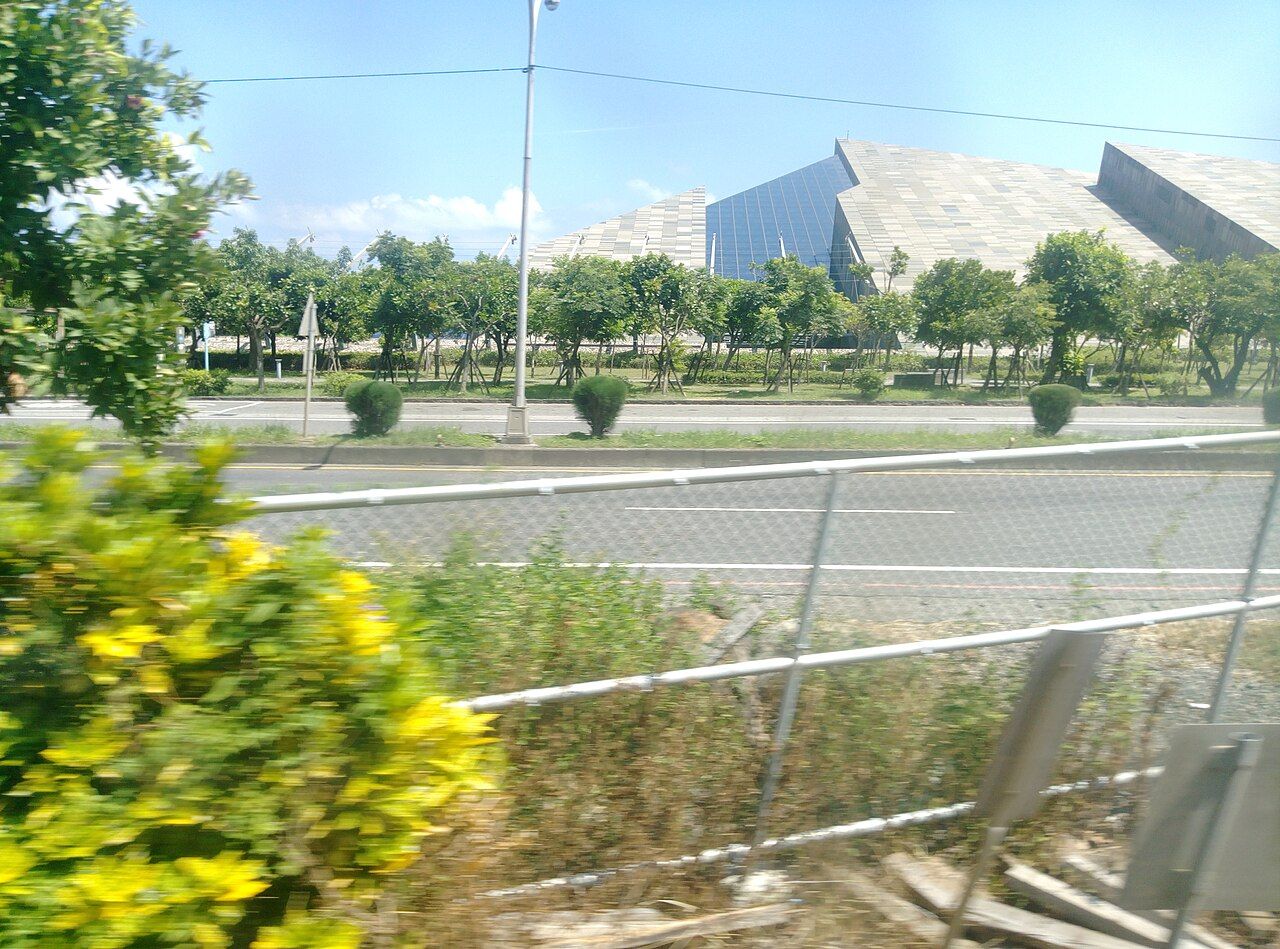
The building makes the coast’s tilted geology part of the museum’s first argument.
The building makes the coast’s tilted geology part of the museum’s first argument.
Outside the museum, Guishan Island is visible from the coast. We like ending with that view because it brings the day’s sequence back to the water, after the exhibitions have carried us from inland country toward the sea. The museum doesn’t need to choose between landscape and history; its shape, its displays and its setting keep those threads close together.
We leave with slightly different favourites: Lou keeps the striped facade in mind, while Omar hangs on to the county-wide journey through the exhibits. At the water’s edge, with Guishan Island visible beyond the coast, both versions seem to fit.
A few details to keep together
| Place | Beside Wushi Harbour in Toucheng |
|---|---|
| Opened | 2010 |
| Design | Kris Yao; shaped by the cuestas of the northeast coast |
| Exhibitions | Yilan County, from mountains through the plain to the sea |
| Outside | A pond and wetland in front; Guishan Island visible from the coast |
 Guishan, the turtle in the view
 Dolphins off Guishan Island
 Fulong by train, sand, and the old Caoling Tunnel