A detour on the Pingxi line, from morning to late afternoon
A day shaped by a coal valley, trains between the shops at Shifen, a waterfall close to the station, and the wooden station at Jingtong.
by Omar and Lou
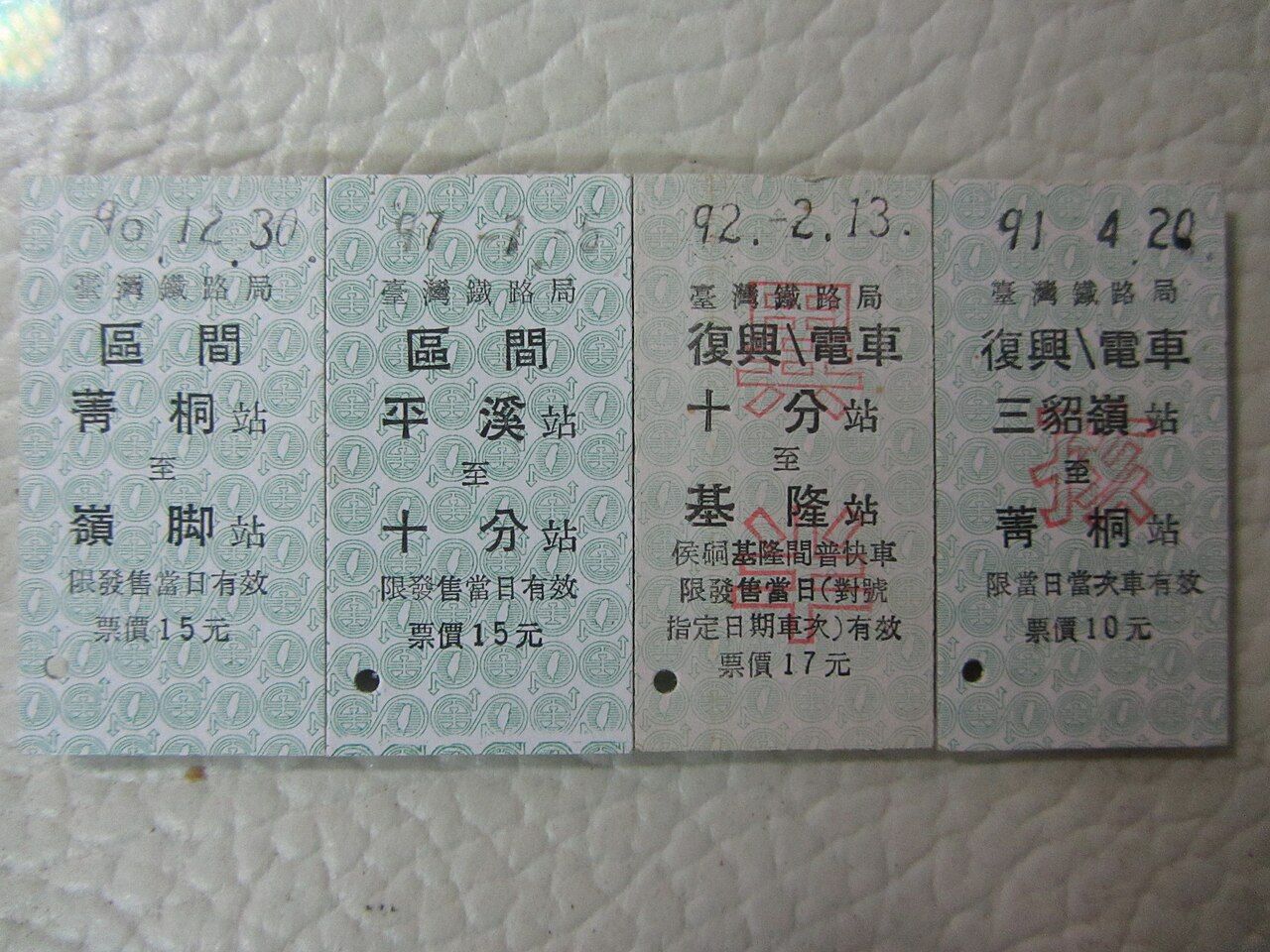
- Out of Taipei
- about 1 h by train
- Where on the coast
- north coast
The Pingxi line is a branch railway about 12.9 km long, running between Sandiaoling and Jingtong through the Keelung River valley in New Taipei. It opened in 1921 to carry coal from the Pingxi area, and that old purpose gives this short railway its shape: a valley route with a clear beginning and end, and a few good reasons to take the day slowly.
Morning: let the valley set the pace
Start at Sandiaoling, where the Pingxi line connects with the Yilan line, then follow the branch north? No: the line runs from Sandiaoling to Jingtong, and the useful thing is simply that the two railways meet here. There are also connections with the Yilan line at Houtong and Ruifang, so the branch has more than one point of contact with the wider railway route.
It’s a single track following the Keelung River valley, which makes the line feel less like a list of stops and more like one connected journey. We’d keep the morning uncomplicated: take the branch toward Jingtong, and leave room for the places that make you want to get off and look around (the day doesn’t have to become a race between stations).
The line was built for coal, not as a scenic flourish, and it opened in 1921 to carry coal from the Pingxi area. Coal mining in the valley ended in the late 20th century, but the railway’s route still tells that earlier story without requiring much explanation.
The track’s old purpose still gives the whole branch its shape: coal moved out of the Pingxi area, and the railway follows the river valley.
The track’s old purpose still gives the whole branch its shape: coal moved out of the Pingxi area, and the railway follows the river valley.
Midday: leave room for Shifen
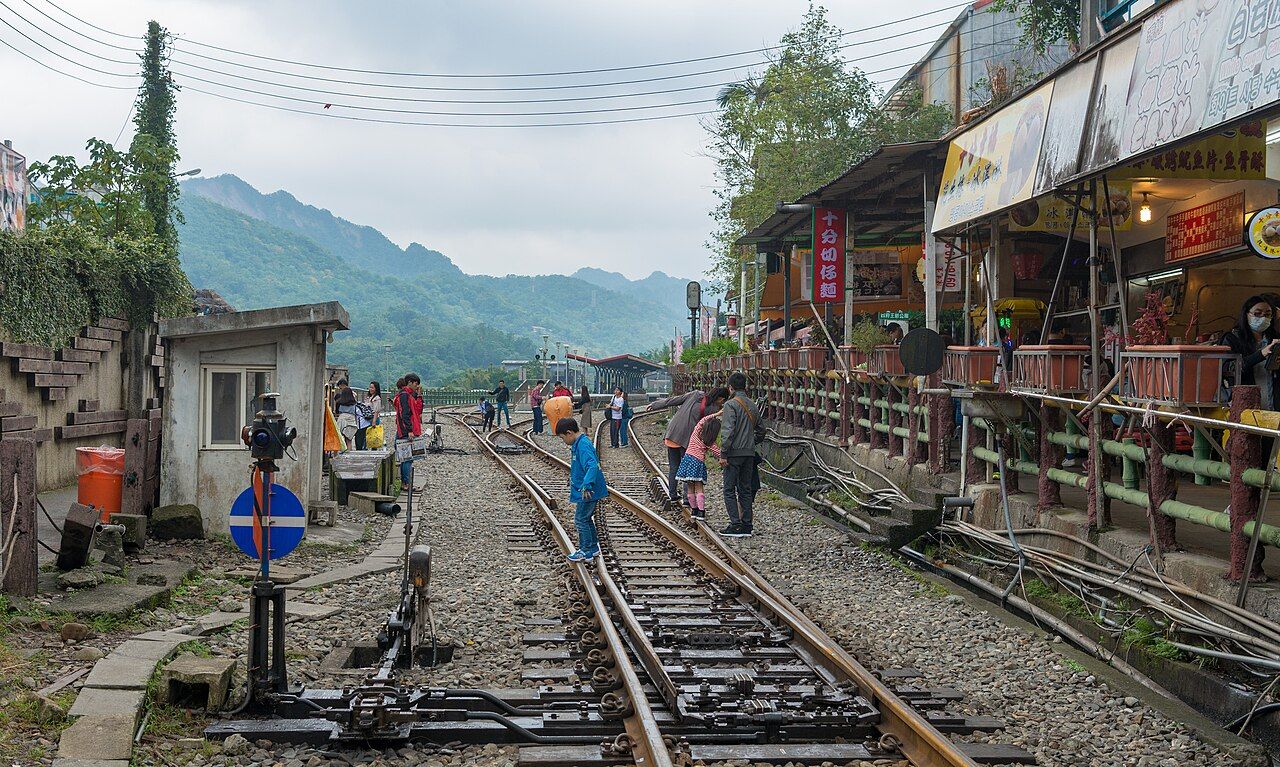
Shifen is where a simple rail journey becomes a rather particular street scene. The old street lies so close to the track that trains pass between the shops, and that closeness gives the street its unusual arrangement.
Sky lanterns are released over the tracks at Shifen, adding another reason this stop can hold the middle of the day. The Pingxi Sky Lantern Festival is held at the Lantern Festival, on the 15th day of the first lunar month; outside that occasion, the lantern tradition remains part of the picture at Shifen.
We’d give this stop time rather than trying to attach a strict clock to it. There’s the track, the old street, and the unusual fact of trains passing between the shops, all gathered close together. Omar and Lou might disagree on whether the street or the train is the better centre of attention; both are right there, and that’s a pleasing sort of disagreement to have.
Shifen Waterfall is a short walk from Shifen station, and it’s about 20 m high. That makes it an easy addition to the middle stretch of the itinerary, without needing to turn the railway day into something more elaborate than it is.
For another small detour, three falls by the junction station gives the route a different kind of pause, with the junction itself marking the connection between the Pingxi line and the Yilan line.
Late afternoon: carry on to the end
From Shifen, keep going to Jingtong, the end of the Pingxi line. The station has a Japanese-era wooden station building, a quieter kind of landmark than the lively combination of tracks and shops at Shifen, and a fitting place to let the day settle.
There’s a nice contrast in moving from a street arranged so close to the railway to a station building that carries its own period character. We’d save enough of the afternoon for Jingtong, rather than treating it as a name at the end of a route map; the endpoint gives the outing a tidy shape.
Then the same branch can carry the journey back toward its connections. Sandiaoling, Houtong and Ruifang all connect with the Yilan line, so the Pingxi line isn’t a railway that has to be approached as a separate, isolated trip. The order of the day is simple: valley first, Shifen in the middle, Jingtong at the end.
That’s enough of a plan for us: a short line with a long past, a street threaded by the railway, and a wooden station at the far end. The route has given us enough to carry back: the valley, Shifen, and Jingtong.
| Route detail | What to know |
|---|---|
| Pingxi line | About 12.9 km, from Sandiaoling to Jingtong |
| Connections | Yilan line at Sandiaoling, Houtong and Ruifang |
| Shifen | Old street beside the track; Shifen Waterfall is about 20 m high |
| Jingtong | End of the line; Japanese-era wooden station building |
| Sky Lantern Festival | At the Lantern Festival, on the 15th day of the first lunar month |
 Three falls at Sandiaoling, one stream-side walk
 South on the Suhua Highway, by the hour
 A line through the coastal seams